ANIM 275: Core Principles of Animated Storytelling and Concept Development
Instructor: Scott Wright
Pre-Quarter Assignment: Cemetery Composition
This painting tells the story of a boy who wants to bring flowers to a friend who has died. Cemetery security stops him from approaching his friend's grave. He is standing in a tree, holding the flowers and trying to reach the grave.
My main focus was lighting. I used contrasts in both light and dark values and warm and cool colors to draw attention to the important parts of the scene.
This was also my first attempt to paint primarily with planes of color. I had previously relied more on lines to construct forms, so I started using larger color shapes and value relationships to organize the painting. I was still unfamiliar with the approach, which made the process challenging.

Process recording
Project 1: The Lost Spaceship
I used a spaceship stranded in the desert to explore differences in scale and the contrast between the ship and its surroundings.
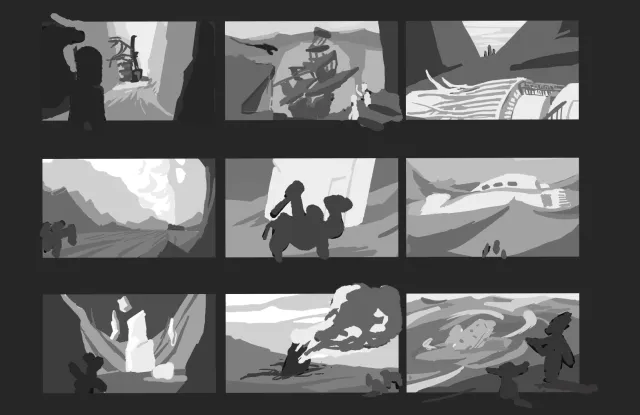
I tried different compositions to explore the difference in size between the ship and the character. In some thumbnails, the spaceship appears enormous and the figure very small. In others, stronger perspective emphasizes the ship's scale and the space around it.
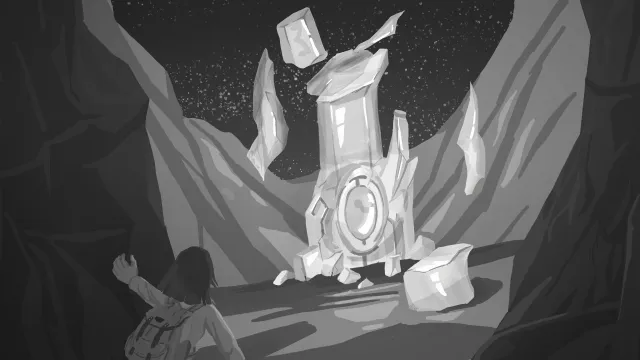
I made nine sketches and selected the seventh, at the bottom left, for the final painting. The scene takes place in a desert canyon surrounded by rough rocks, with a spaceship made of transparent crystal in the middle.
I wanted the smooth crystal to contrast with the rough rock, while the ship's own light contrasts with the darkness of the canyon. These differences also help convey the sense that the ship and its surroundings belong to different eras.
In this project, I learned to apply the 7:2:1 principle in composition, using the proportions occupied by different visual elements to control the focal point.
Rendering rock and crystal pushed me to move beyond line-based construction and use broad shapes of light and shadow to describe volume and materials.
Process recording
Project 2: The Mimetic Braincase
Completed: October 8, 2026
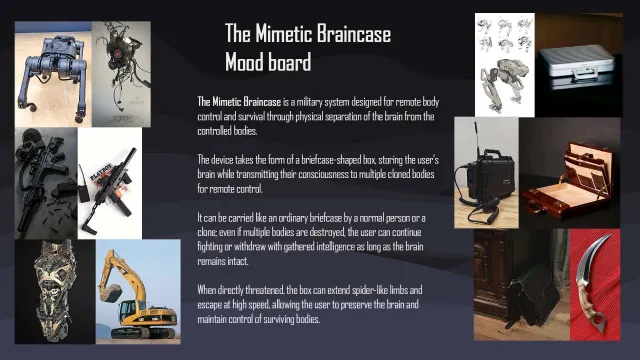
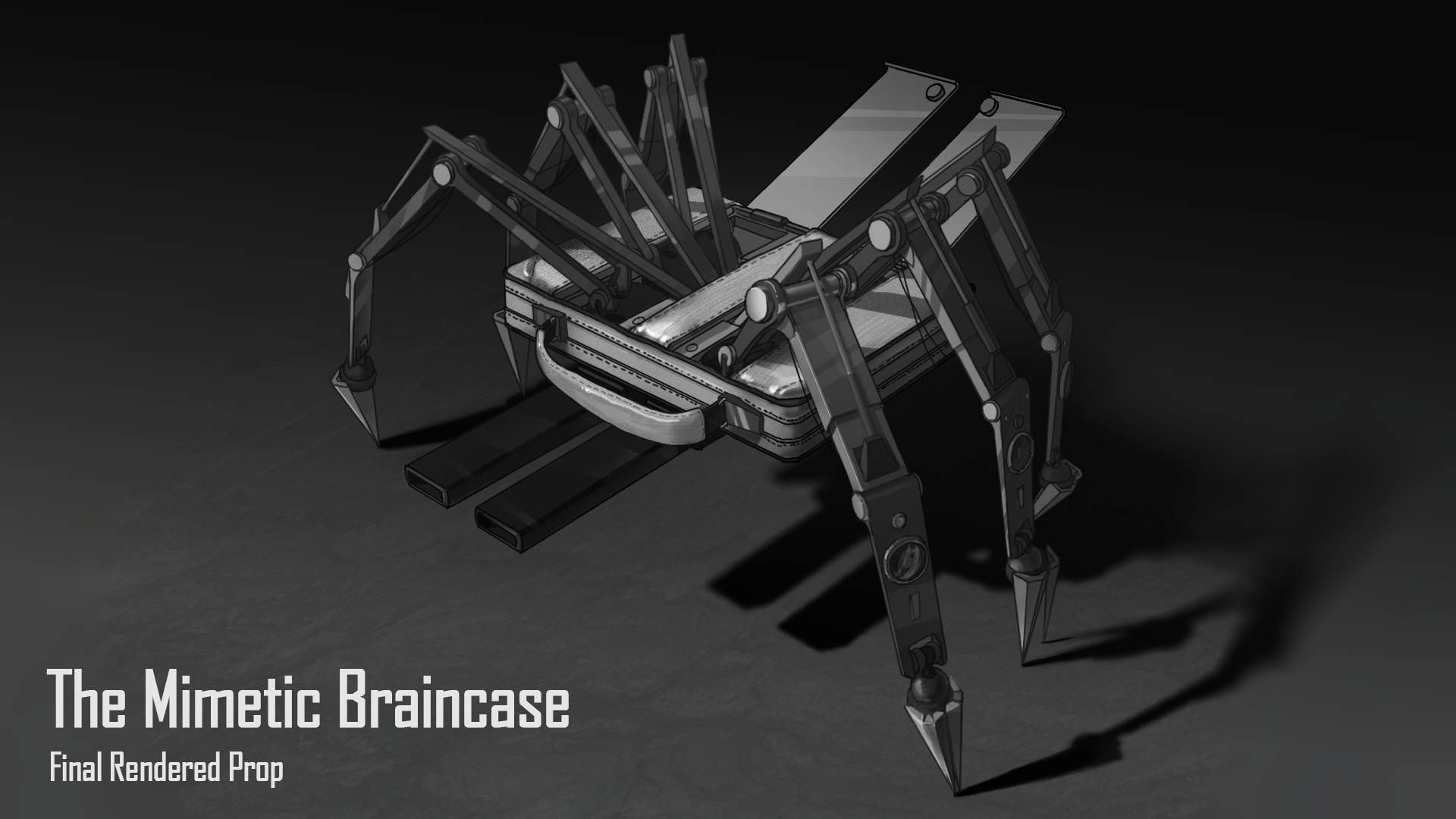
I adapted the Mimetic Braincase from The Star of Embarkation for a prop-design assignment. The suitcase-shaped mechanical container houses a brain and controls cloned bodies through neural interfaces. My focus was mechanical construction, perspective, and material rendering.
Prop Design and Rendering
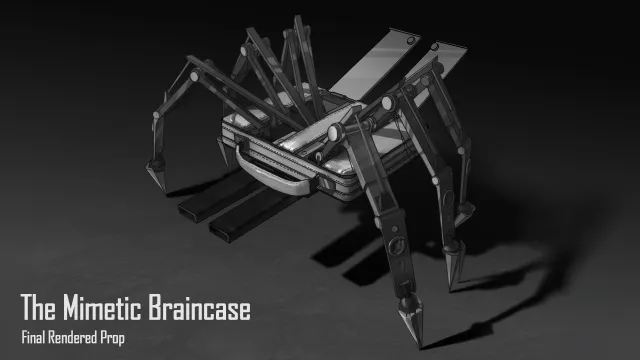
The design combines mechanical arms, a leather case, and two gun barrels beneath it. I worked on the contrast between metal and leather while refining how the components connect.
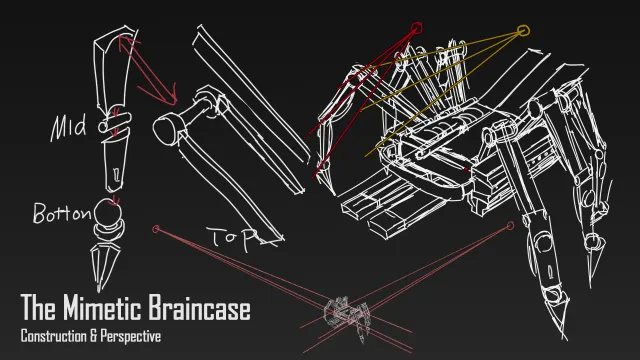
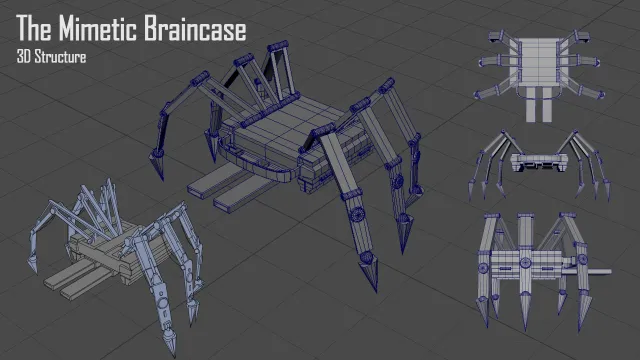
The original sketch contained so many connected parts that keeping the perspective accurate became difficult. I built a simplified model in Maya to establish the component positions and perspective, then used it as reference for the final two-dimensional painting. The shadows also drew on the three-dimensional model and were rendered in Photoshop. This workflow helped me maintain the structure while concentrating on different material qualities.
The Brain and Its Clones
I took inspiration from the hive structure in Ender's Game: as long as the hidden controller survives, it can continue operating other bodies.
Neural interfaces can be implanted in different locations, including both the brain and spinal cord of the same clone. Even if a clone suffers an otherwise fatal head injury, the controller can continue directing its movements through the spinal interface. One controller can command several clones simultaneously, coordinating them in combat and effectively forming an army of one. If a clone dies, its controller still receives the information that clone acquired. This makes the system valuable for both combat and intelligence gathering.
Concealment and Connection Limits
The brain container is disguised as an ordinary suitcase that a clone can carry. Concealed mechanical legs allow it to move at high speed like a spider. Because of this mobility, the small container can conceal itself underground, in grass, or high in trees, far from the center of a fight. In a complex environment, a searcher would find it almost impossible to locate without a way to determine its position first.
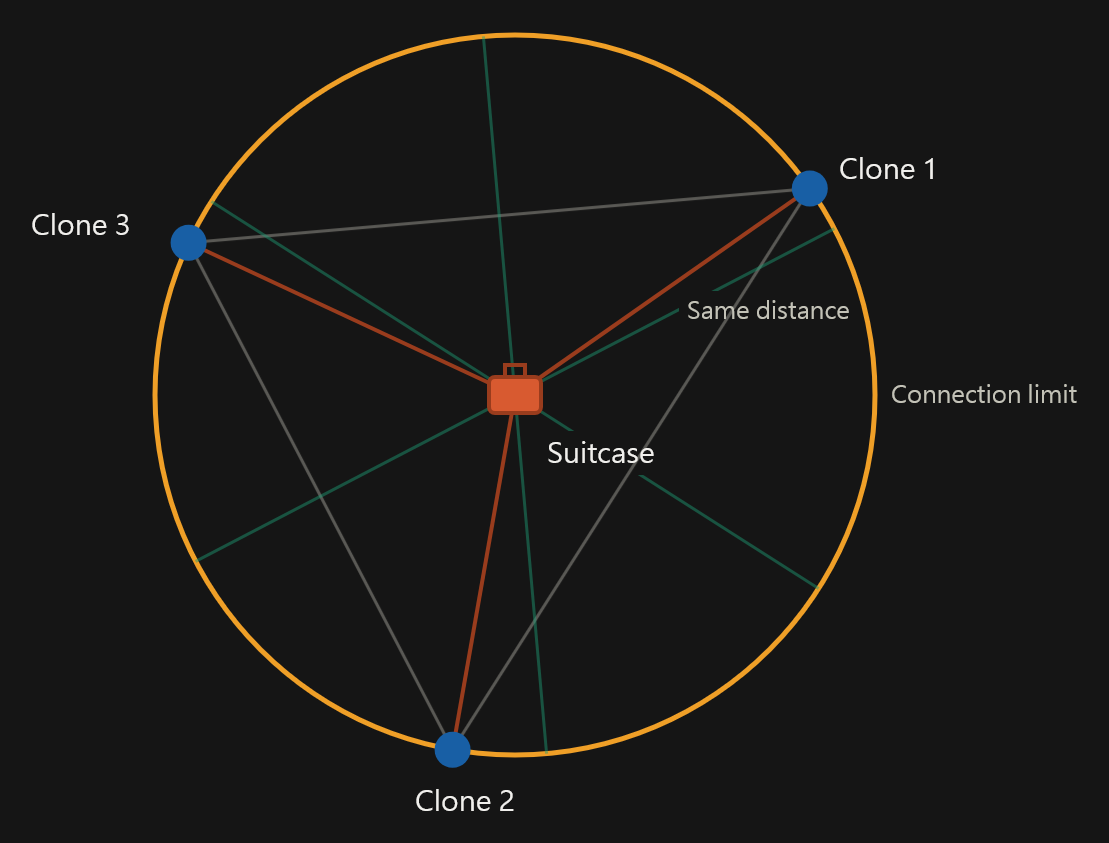
All clones must remain connected within a limited circular range centered on the suitcase to keep moving. For protection against hacking, a disconnected clone cannot reconnect by itself. The controller is highly capable of hiding and escape, but it also needs to keep its valuable clones inside that connection radius.
Combat Design: Locating the Hidden Controller
The searcher must first recognize that multiple clones are being controlled by a single hidden entity. Their movements can then reveal a limit to their operating range. Discovering the boundary alone does not reveal the radius or the center of that circle. I illustrated a geometric way to infer the suitcase's position in five diagrams.
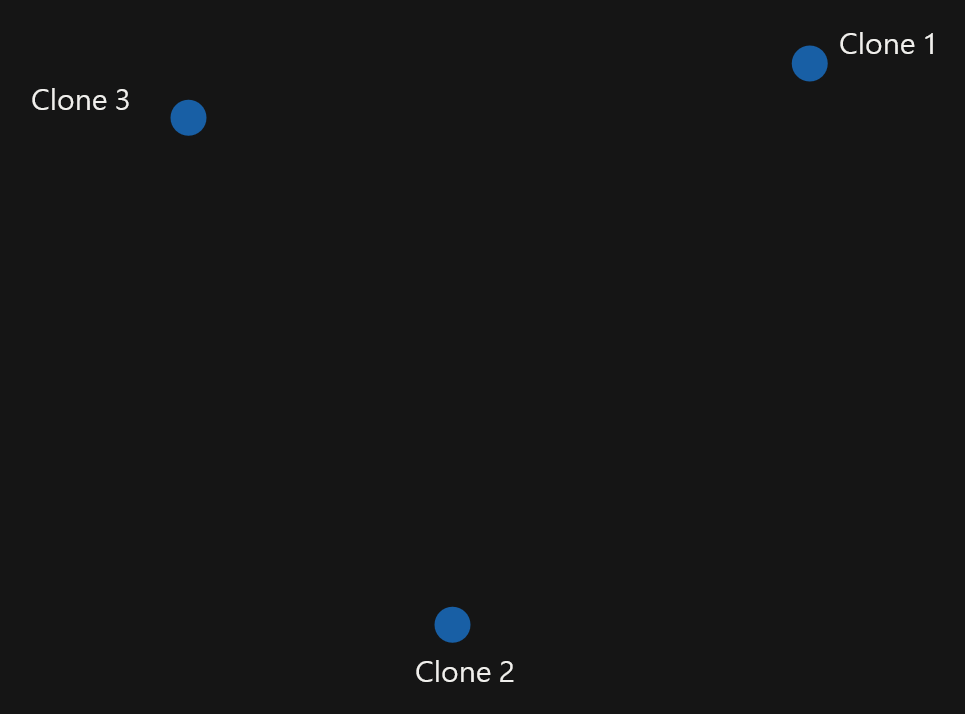
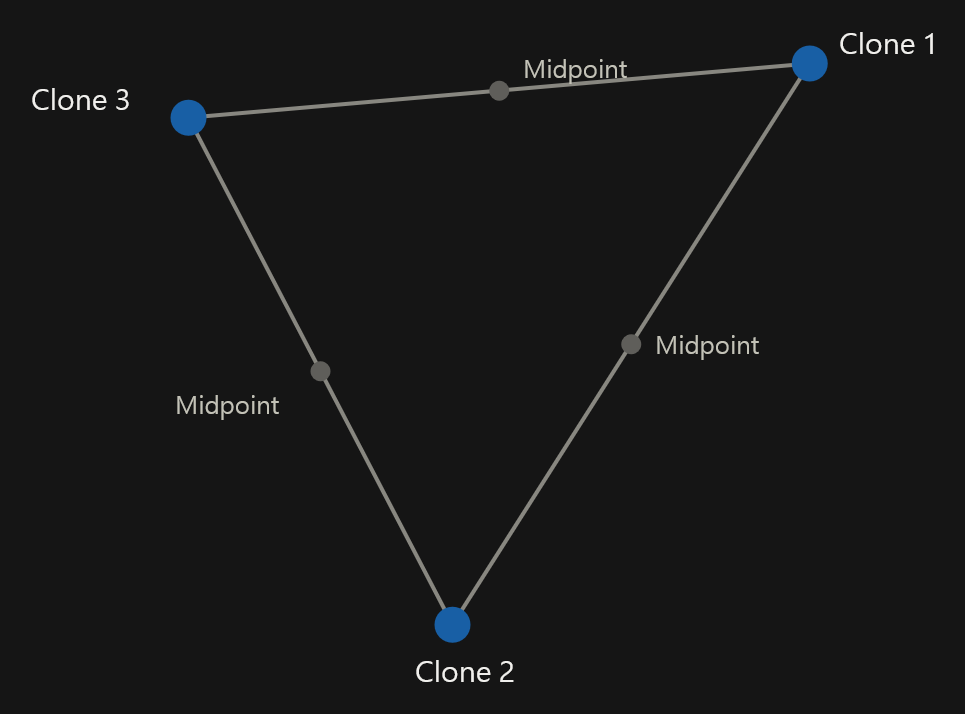
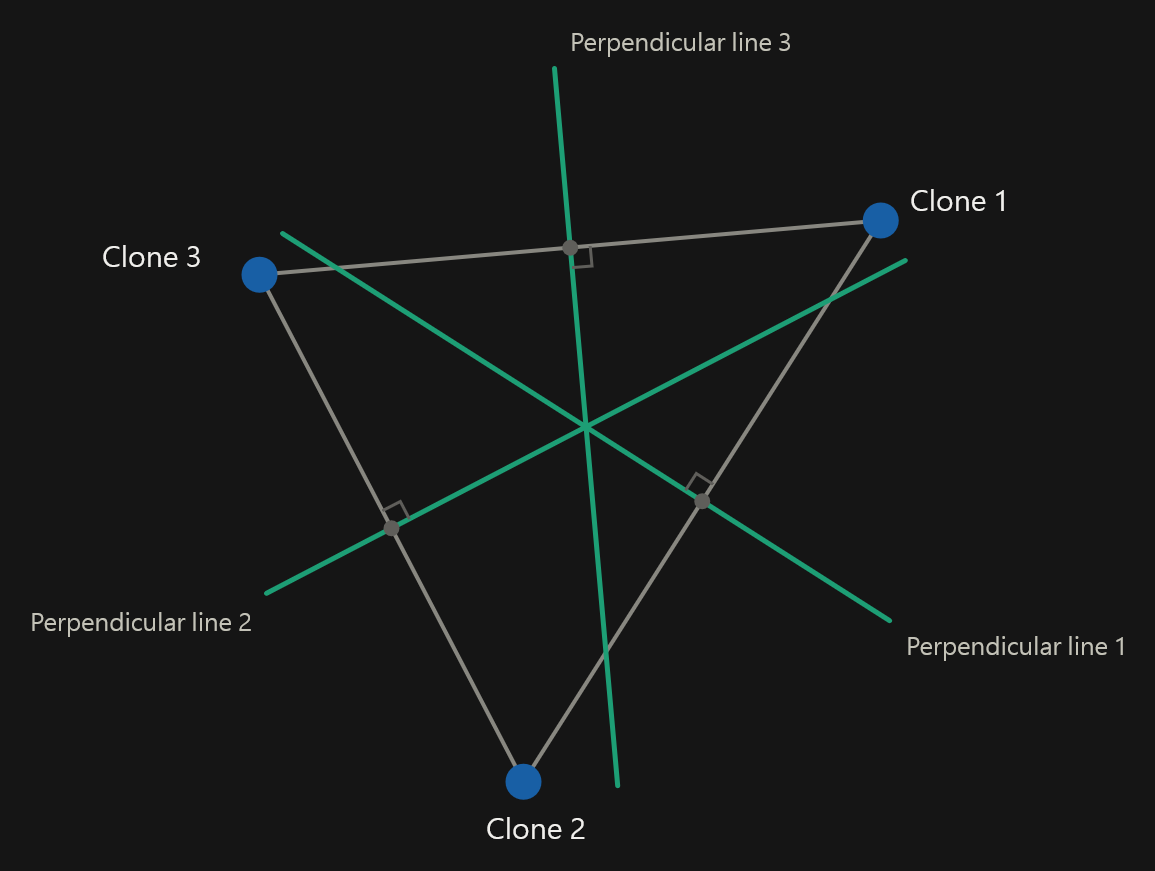
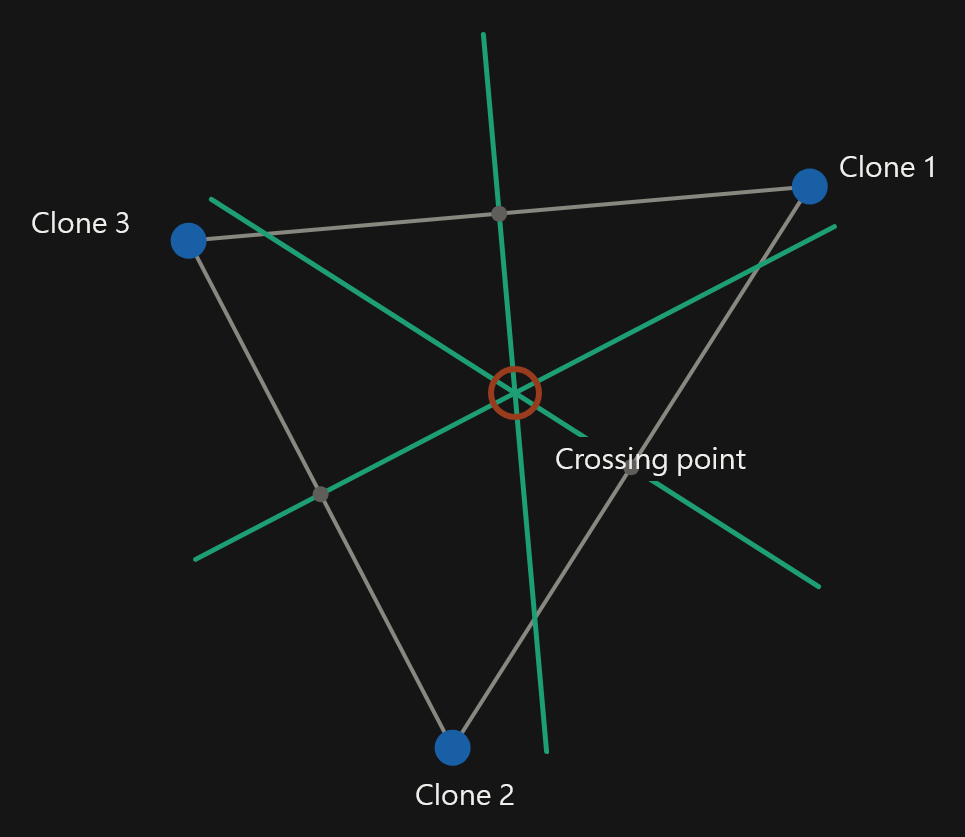
The full enemy concept and combat design in The Star of Embarkation:
Project 3: Ori Style Deconstruction and Reinterpretation
This project involved studying the visual style of an animated work or game and creating an original character that would fit within it.
I chose the Ori series because I have always been very fond of its concept art.
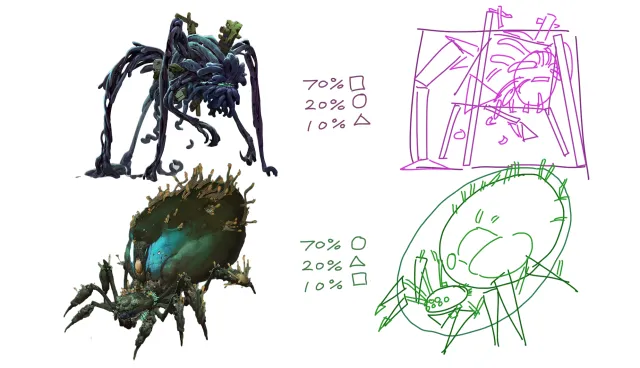
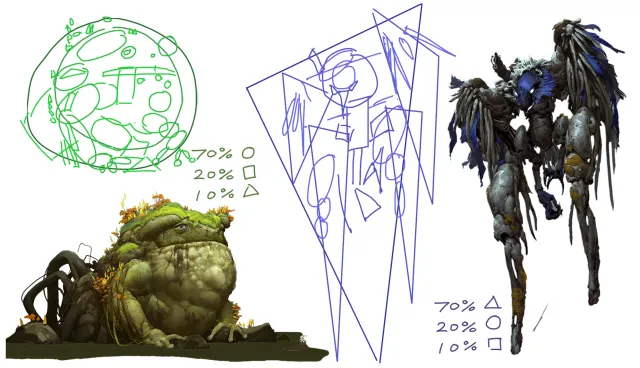
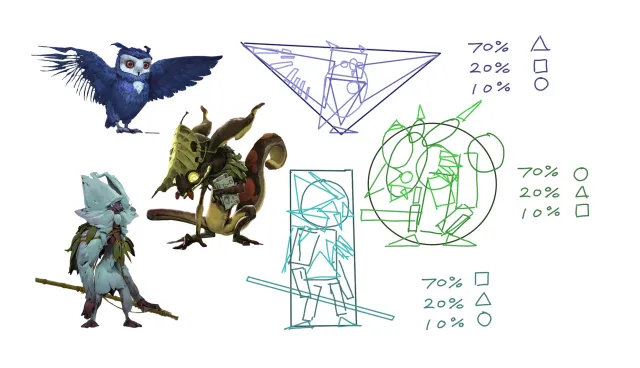
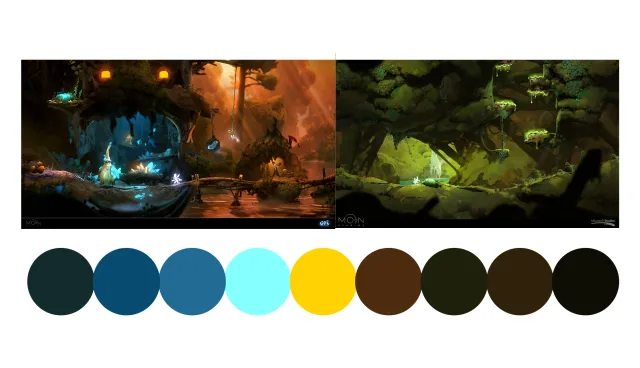
I first analyzed the characters' forms, silhouettes, and colors. I used visual diagrams to break down their basic geometric shapes, and I also studied how the 7:2:1 principle appeared in the proportions of colors and other visual elements.
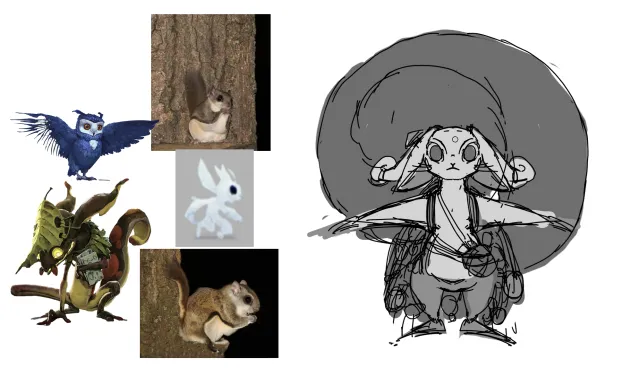
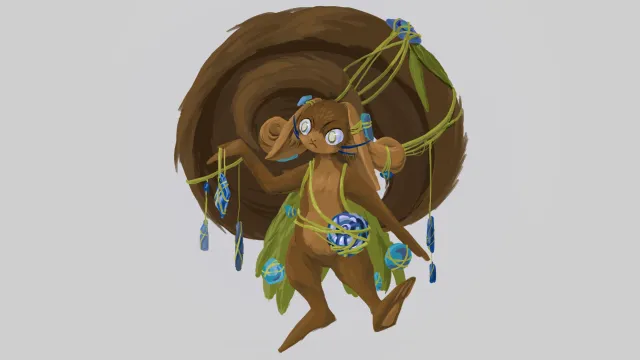
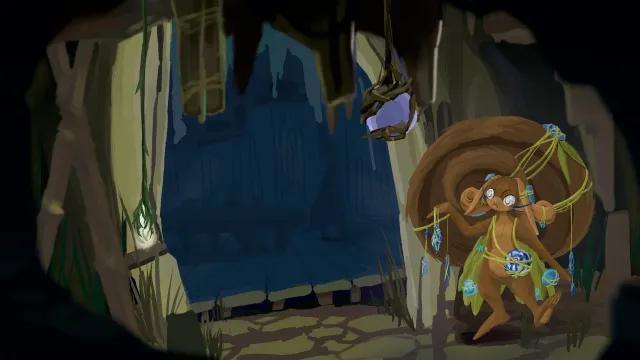
I then developed my own character: a friendly jeweler who could travel alongside the protagonist.
I started with character sketches and completed a front view. I tried to make the character's shapes and colors fit the Ori style, and spent time attempting to paint a convincing soft, furry texture.
Finally, I placed the character in an Ori-style environment to study how the figure and setting worked together. I also experimented with depth of field to give the foreground, middle ground, and background a stronger sense of distance.
Process recording
Project 4: Storyboard from The Star of Embarkation
Completed: October 5, 2026
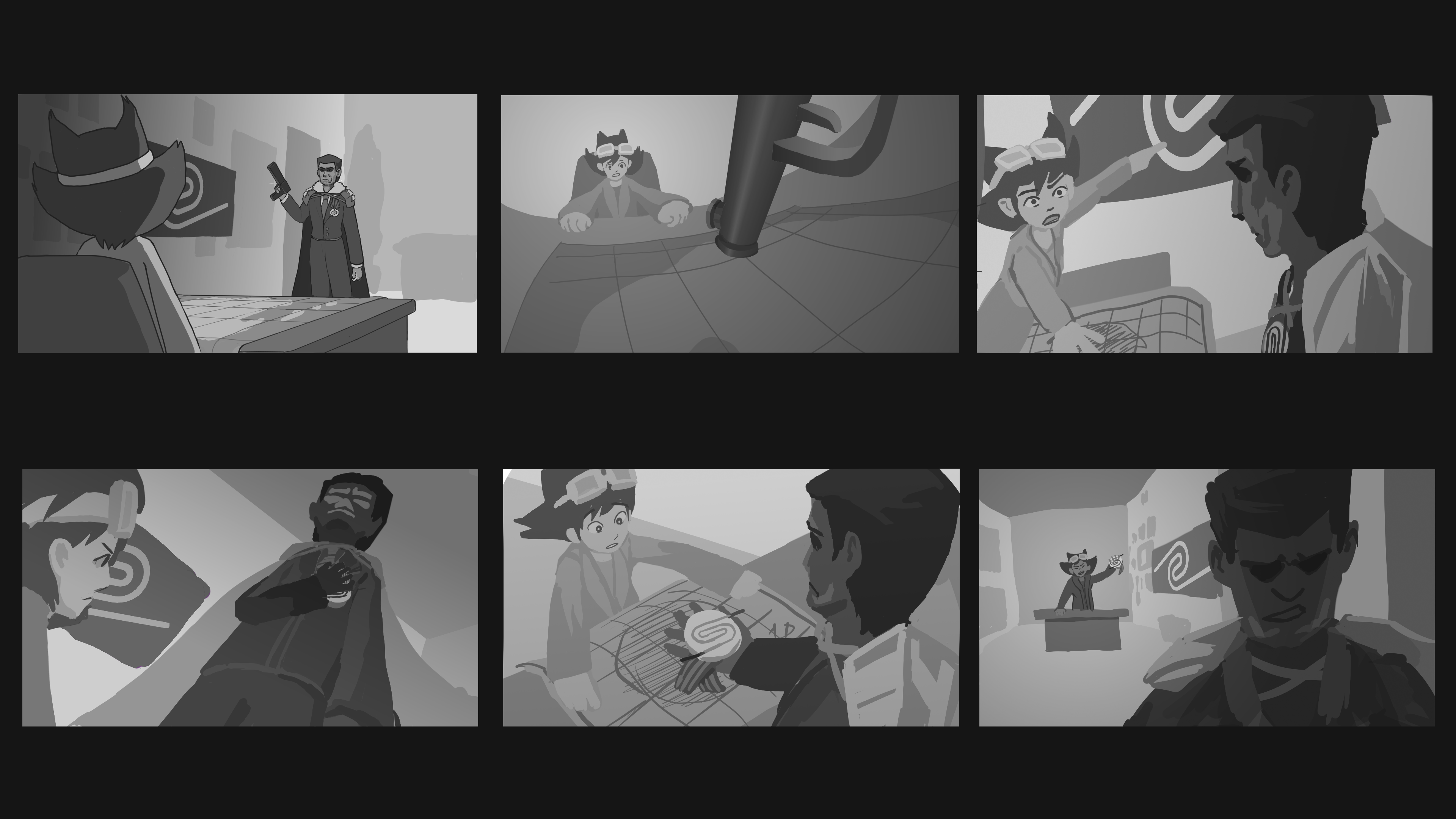
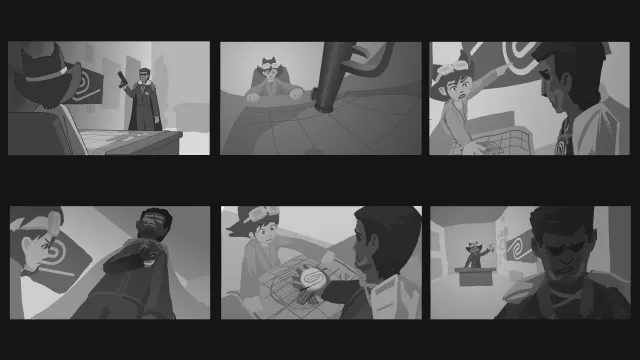
For this storyboard, I adapted a scene from my original series, The Star of Embarkation, in which Dyson and Lucian fall out over their opposing beliefs.
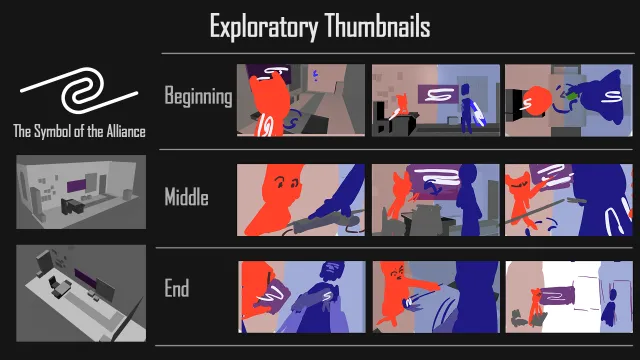
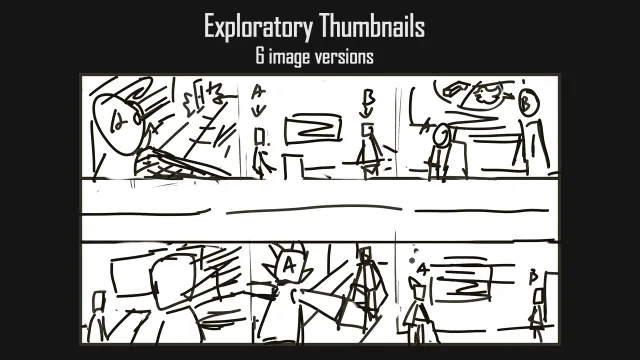
I initially prepared nine storyboard sketches, then condensed the sequence to six panels to make the conflict more focused.
I used objects and gestures to convey the characters' relationship. The emblem of the Embarkation Plan represents the ideals they once shared and the time when they worked together. Lucian pointing his gun at a map communicates his intention to destroy the elves through war.
As their conflict deepens, Dyson walks away. In the storyboard assignment, I depicted him discarding the Embarkation Plan emblem as a visible sign of his break with Lucian.
This ending was adapted for the storyboard assignment. In the planned story of The Star of Embarkation, Dyson does not discard the emblem. Dyson and Lucian each believe that they are the true representative of the Embarkation Plan. Even after their beliefs become irreconcilable, both remain committed to their own understanding of the plan and neither accepts that they have abandoned its original ideals.
The challenge was to compress a complex scene into six sequential images, conveying the conflict through gestures, camera choices, and meaningful objects.
Process recording
The story in The Star of Embarkation: